📖 Leah and Rachel: What God Sees When No One Is Watching
✨ "And the Lord saw that Leah was unloved, and He opened her womb; but Rachel was barren."
— Genesis 29:31
On the journey of faith, we often feel defined by our circumstances or by how others see us. The story of these two sisters teaches us that the human eye is limited: Jacob saw beauty in one and weariness in the other, but the eye of God saw purpose in both.
🥀 Leah: The Courage in the Midst of Disdain
Leah's name is traditionally associated with being "weary," "fatigued," or "faint." She was not the chosen one by her husband; she was the result of deception and carried the lack of affection in her home.
However, Scripture reveals to us a transforming truth:
"And the Lord saw that Leah was unloved, and He opened her womb; but Rachel was barren."> — Genesis 29:31
- Divine Purpose: God took the "weary" woman to make her the pillar of the royal lineage.
- From Affliction to Praise: When her fourth son was born, her perspective changed from pain to worship as she declared:"This time I will praise the Lord".
- The Lion of Judah: From her lineage came Judah, from whom our Savior, the Lion of the Tribe of Judah, comes.
- Honor Final: Although she was not the man's first choice, she was honored by God even in death, being buried in the place reserved for the patriarchs.
Explore more
Editions for the Soul
Exclusive materials designed to inspire, heal, and strengthen your walk with God through the study of His Word.
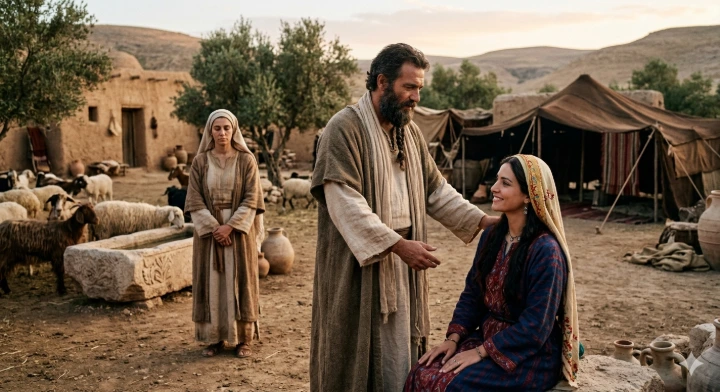
"She conceived again, and bore a son, and said: This time I will praise the Lord; therefore she called his name Judah; and she stopped bearing."> — Genesis 29:35
🐑 Rachel: Beauty, Idolatry, and Bitterness
Rachel means "Ewe" and represents visual purity and external beauty. But despite Jacob's love, her inner self struggled with envy and bitterness.
Even in death, she tried to mark her son's destiny from her pain:
"And it came to pass, as her soul was departing (for she died), that she called his name Benoni; but his father called him Benjamin."> — Genesis 35:18
- Benoni: Means "Son of my sorrow" or "Son of my pain."
- Benjamin: Means "Son of my right hand" or "Son of my strength."
- Grace in the Struggle: God did not allow the child to carry the bitterness of his mother and, through Joseph (Rachel's son), brought salvation to the whole family.
🎨 Our Identity as "Poiema" 📜
It doesn't matter if today you feel like Leah (despised) or like Rachel (trapped in your mistakes); in God's hands, both are materials for His masterpiece.
"For we are His workmanship, created in Christ Jesus for good works, which God prepared beforehand that we should walk in them."— Ephesians 2:10
- You are a Poem: The word "workmanship" comes from the GreekPoiema. God designed us with a specific purpose that transcends our human limitations.
🔍 A time to reflect
- Is there any area of my life where I feel "despised" or "weary" like Leah? When reading Genesis 29:31, how does my perspective change knowing that God sees my affliction?
- When considering the name change from Benoni to Benjamin in Genesis 35:18, what "names of pain" do I need to surrender to the Lord today so that He can transform them into my strength?
Final words:
Today, rest in this truth: what the world calls "despise" is often the place where God is birthing His greatest blessing. You are not the name your circumstances gave you; you are the name that the Designer wrote in His eternal poem. You are His workmanship!
🙏 Personal Prayer:
Lord, thank You for Your gaze is not like mine. Thank You for seeing purpose where I see weariness, and grace where I see bitterness. I ask that You heal my heart from any despise and help me see myself as Your "Poiema," created for good works. May I praise You today like Leah and embrace the new destiny You have for me. Amen.